It Starts with Prada. It Ends with Cowbells.
From Milan to the Alps.
Many of our summer guests now fly into Milan, pick up a car and drive north to us in Zell am See. At first it was just the practical way in. Today I honestly believe it is one of the most beautiful drives in Europe.
In one week you go from espresso bars and designer windows to lemon gardens on a lake, mountains that glow pink at sunset, a roof made of gold, a waterfall with a rainbow inside it, and finally a quiet alpine lake where the only traffic jam is the cows coming home.
Here is the Milan to Austria road trip the way I would drive it. The stops I would never skip, and the small tips that turn a transfer into the trip of your life.
Come for the shopping. Stay for the way they live.
Yes, Milan is fashion. Walk Via Montenapoleone and the windows look like museums. But the real Milan is not something you buy. It is espresso drunk standing at the bar, the way locals do it. It is long lunches, Sunday afternoons in Parco Sempione behind the castle, and the city slowing down when the sun drops.
Then comes aperitivo, the most Milanese hour of the day. Order a drink on the Navigli canals and little plates simply appear. Try a Negroni Sbagliato, the “mistaken” Negroni that was born right here, at Bar Basso.
Saffron-yellow risotto alla milanese, a golden cotoletta alla milanese, and a hot panzerotto from Luini, the tiny shop behind the Duomo where Milanese have queued since 1949.
Don’t pick up your car on arrival. In Milan you walk, take the metro or the tram, and the city centre has a daily charge for cars (Area C). Collect the car on the morning you leave the city and start the road trip fresh.

Look down. Spin three times.
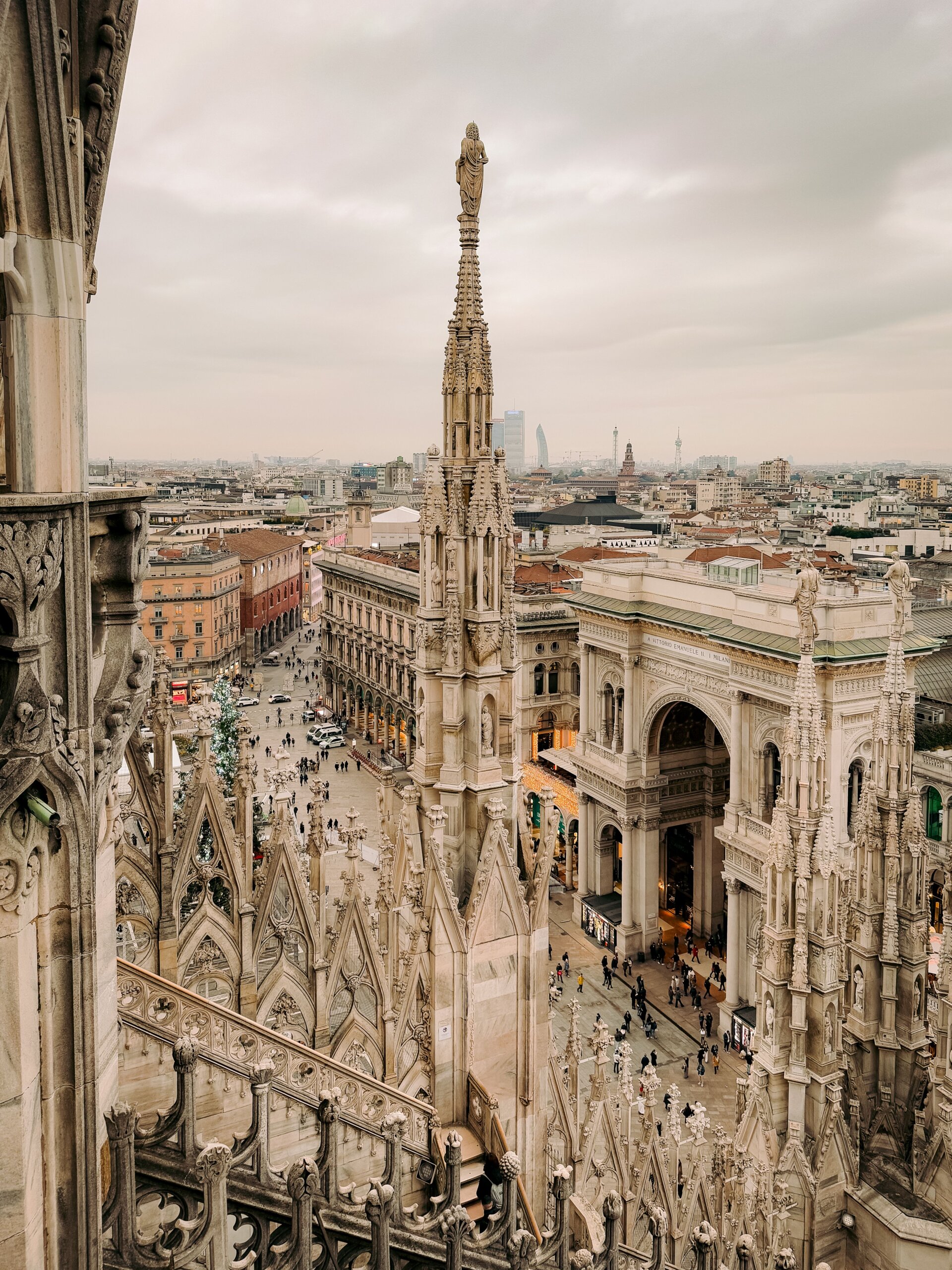
Be at the Duomo when it opens and climb to the rooftop terraces. You walk between marble spires and statues while the city wakes up below you. Two hours later, you will be sharing it with half the world.
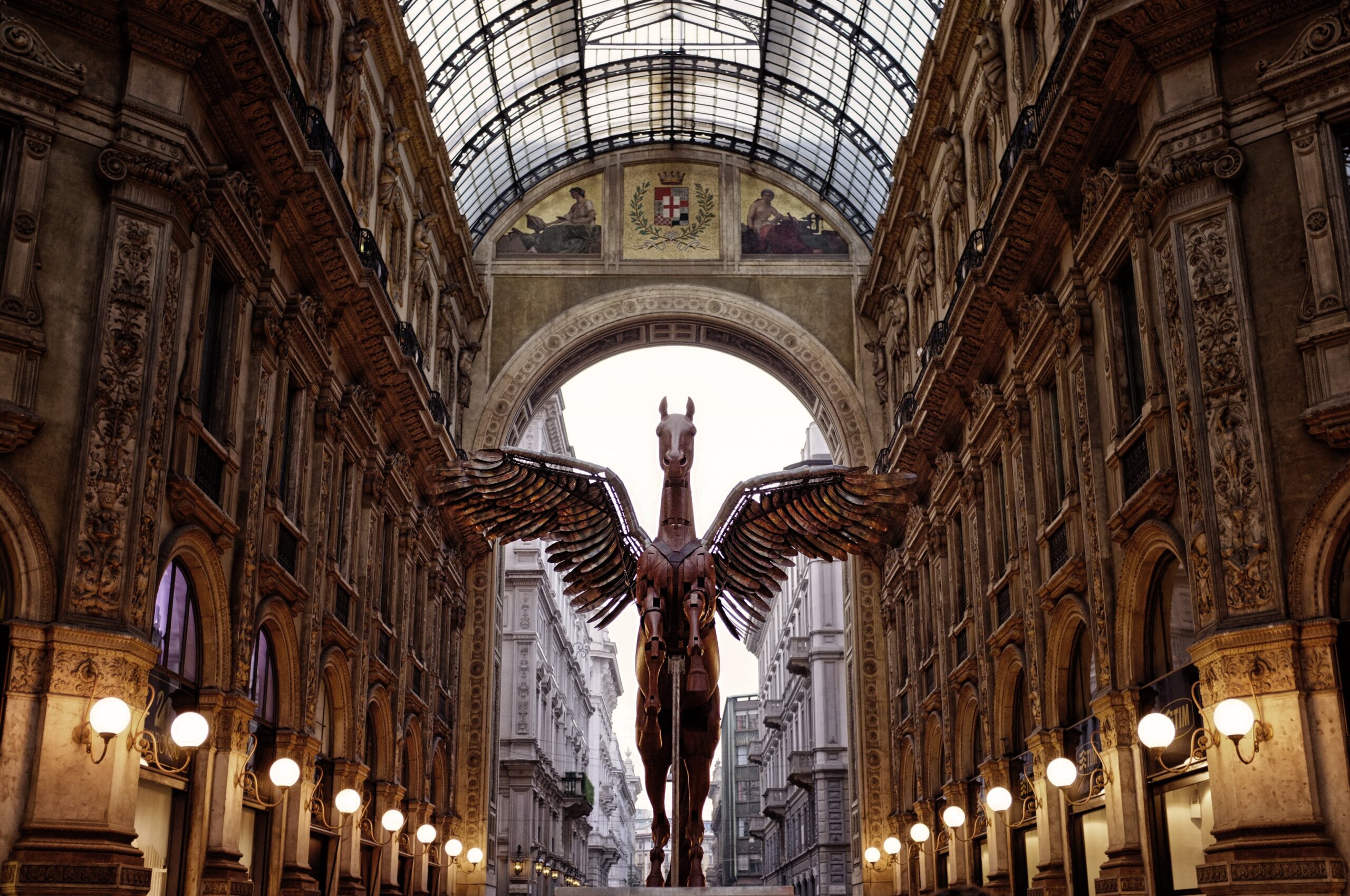
Then walk into the Galleria Vittorio Emanuele II, under the glass dome, and look at the floor. There is a little mosaic bull. Put your heel on it and spin around three times. The Milanese say it brings luck and that you will come back to Milan. Judging by the hole in the floor, a lot of people believe them.
Leonardo’s Last Supper can only be seen with a timed ticket, in small groups, for about 15 minutes. Tickets go fast, often weeks before. If it matters to you, book it the day you book your flights.
The Temple of Speed
Just outside Milan lies Monza, home of the Autodromo Nazionale, the legendary Formula 1 track racing since 1922. Italians simply call it the Temple of Speed. Stand on the old banked curve and you can almost hear the engines.
The track sits inside the park of the Villa Reale, one of the largest walled parks in Europe. Petrolheads get their dream, everyone else gets a beautiful morning walk.
The stop everyone skips. Don’t.
Most people race past Bergamo on the motorway. Big mistake. Up on the hill sits the Città Alta, a perfect old town inside Venetian walls that are UNESCO World Heritage. Take the funicular up and you are in another century.
And here is a sweet fact: stracciatella gelato was invented in Bergamo, at La Marianna, in 1961. Eat it where it was born.
Don’t drive into the upper town. It is a limited traffic zone and the fines arrive by post, months later. Park below and ride the funicular.
The moment the journey begins to breathe.
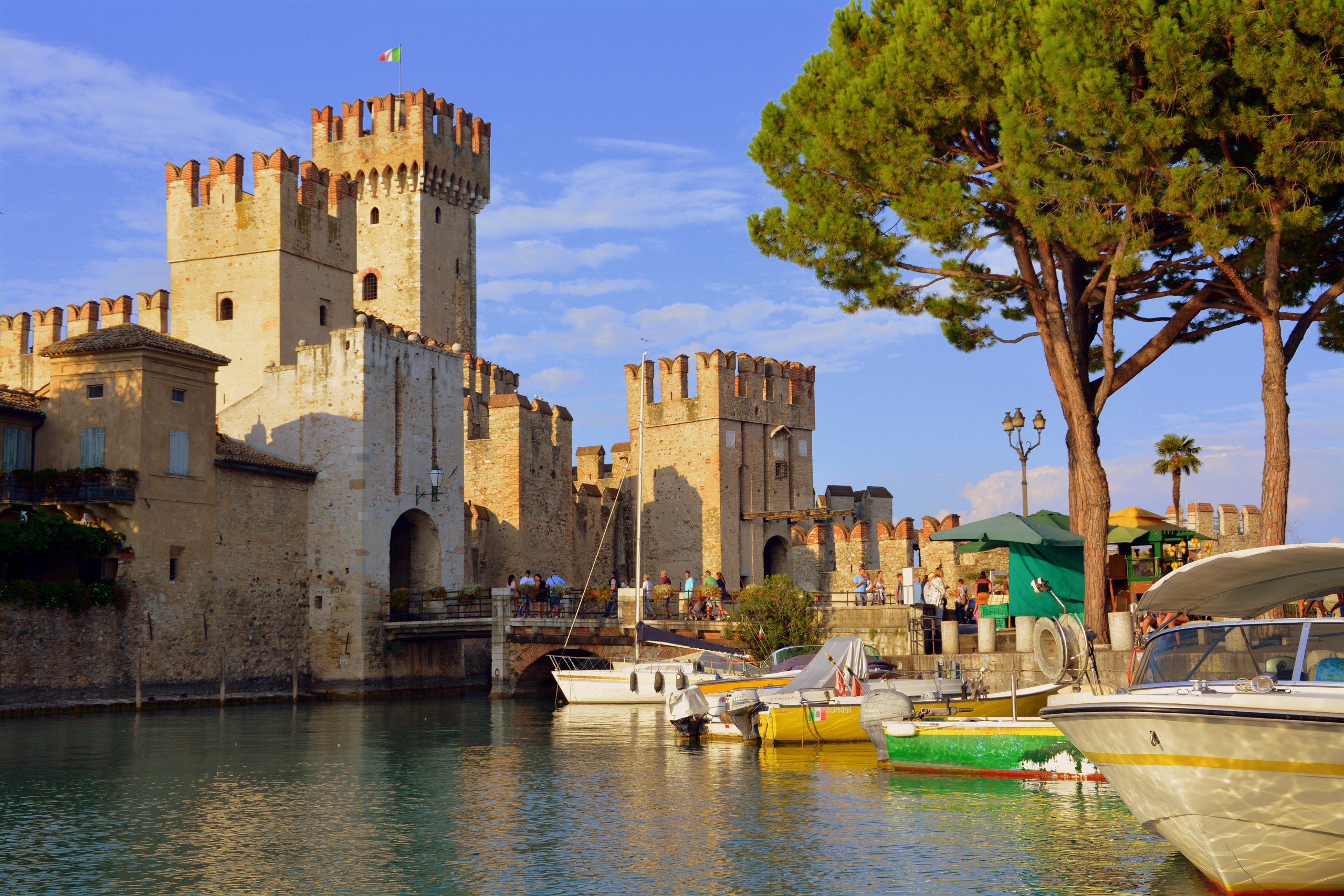
Sirmione sits on a thin finger of land pushed into the lake, with a medieval castle standing in the water like a fairy tale. At the tip are the ruins of a Roman villa and smooth white rocks where people swim in water as clear as glass.
From here, drive the western shore to Limone, where lemons have grown in old terraced gardens for centuries, and on to Riva del Garda, where the mountains drop straight into the lake. Goethe arrived here in 1786 and wrote that he finally felt he was in Italy. Stand there yourself and you will understand why.
Sirmione is magic before 9 am and after 6 pm. In between, the day-trip buses arrive. Sleep there one night and you have it almost to yourself. And on the western shore road, pull over only in the marked bays: the tunnels are narrow and the views are worth a proper stop.
 Next: the Dolomites
The mountains that blush at sunset.
North of the lake, the vineyards climb, the road signs suddenly speak German and Italian, and your espresso comes with apple strudel. Welcome to South Tyrol. Turn into the Dolomites and the mountains look almost unreal: pale rock towers, green meadows, lakes in colours you didn’t know water could have.
Locals tell the legend of King Laurin, a dwarf king with a garden full of roses. When it was discovered, he cursed it so no one could ever see it again, by day or by night. But he forgot about dusk. That is why, for a few minutes at sunset, the mountains still glow pink. Here they call it enrosadira. Watch it once and you will believe every word.
Sleep up in the mountains, not down in town. The magic happens at sunset and sunrise, when the day visitors have already left.
The most famous spots are popular for a reason. In high summer, driving to Lago di Braies needs a pre-booked time slot. Check it before you go, or arrive by bus and skip the parking stress.
Over the pass and into the Alps.
The Brenner Pass is the old road Romans, emperors and merchants used to cross the Alps. One moment you are in Italy, the next you are in Austria, and the houses suddenly wear flower boxes.
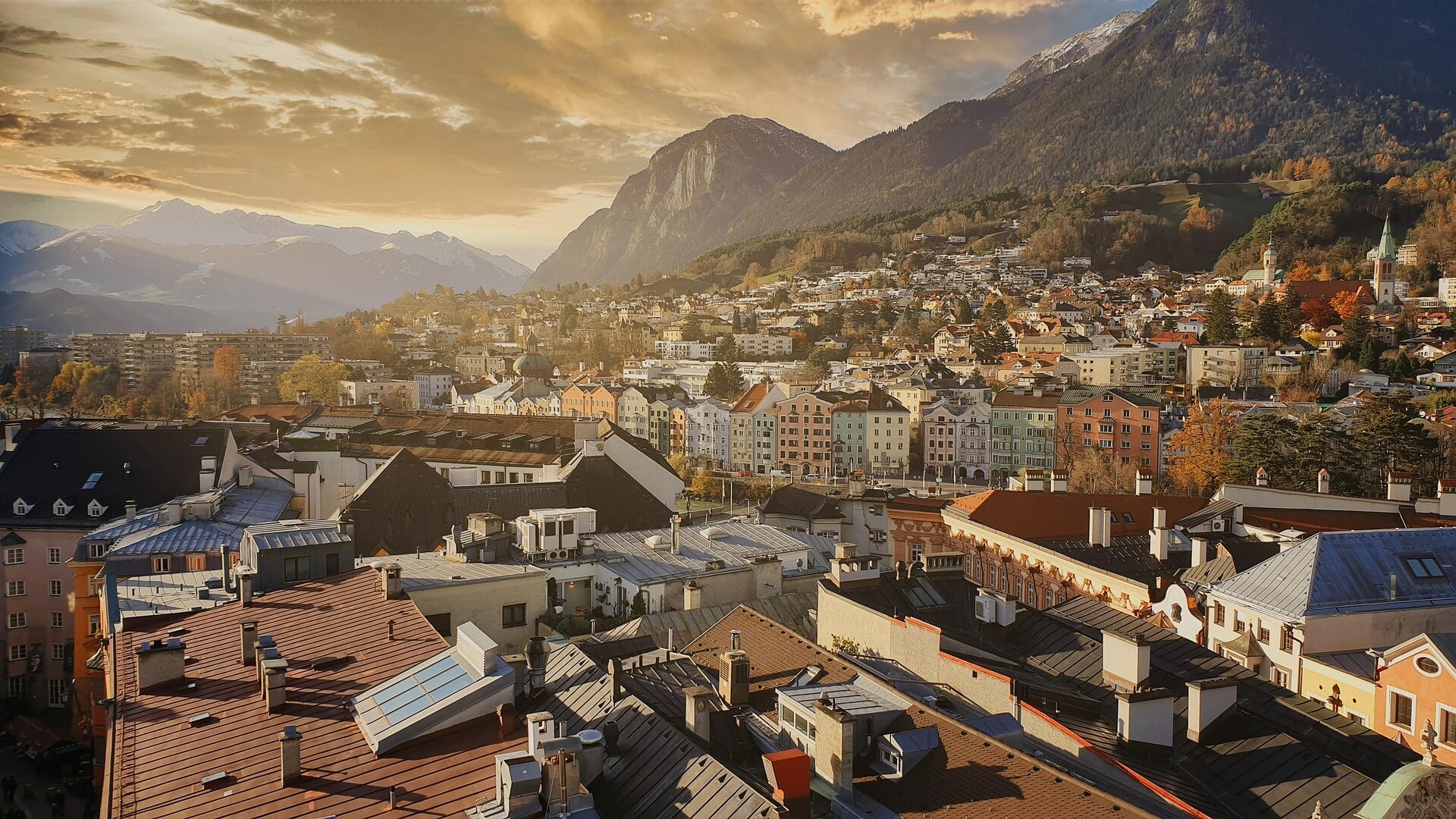
Innsbruck is a city with mountains at the end of every street. In the old town, look for the Golden Roof, covered with more than 2,600 gilded copper tiles, built around 1500 so Emperor Maximilian could watch the festivities below in style. Then take the Nordkette cable cars straight from the city centre and stand above 2,000 metres in under half an hour.
Austrian motorways need a vignette. Buy the digital one online before you cross the border, so you don’t have to stop. The Brenner motorway has its own toll on top, paid at the booth.
Tiroler Gröstl: potatoes, onions and bacon in a hot pan with a fried egg on top. Mountain food at its most honest.
Take the slow road. It is the whole point.
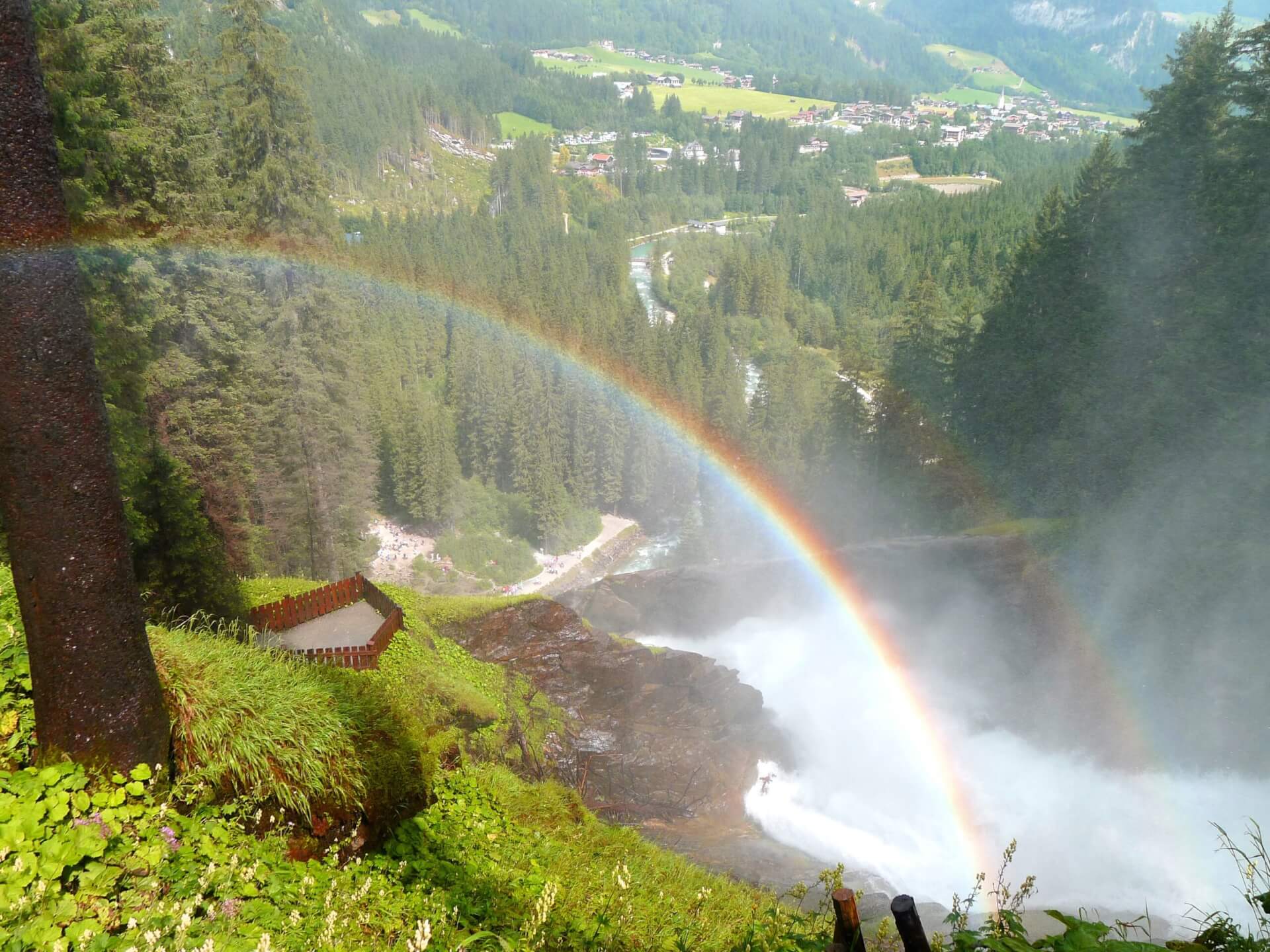
From Innsbruck, skip the fastest route. Drive into the Zillertal, climb the Gerlos high alpine road and come down to the Krimml Waterfalls, the highest in Austria, falling 380 metres in three giant steps.
Up here you feel small, in the best possible way. The air is cold and wet with spray, the noise fills your chest, and suddenly nothing back home seems that important.
Go in the morning, when the sun hits the spray. If you are lucky, a rainbow hangs right inside the waterfall. Bring a light rain jacket for the lower viewpoints. And remember the Gerlos road is a toll road, so keep a card handy.

And then, the cowbells.
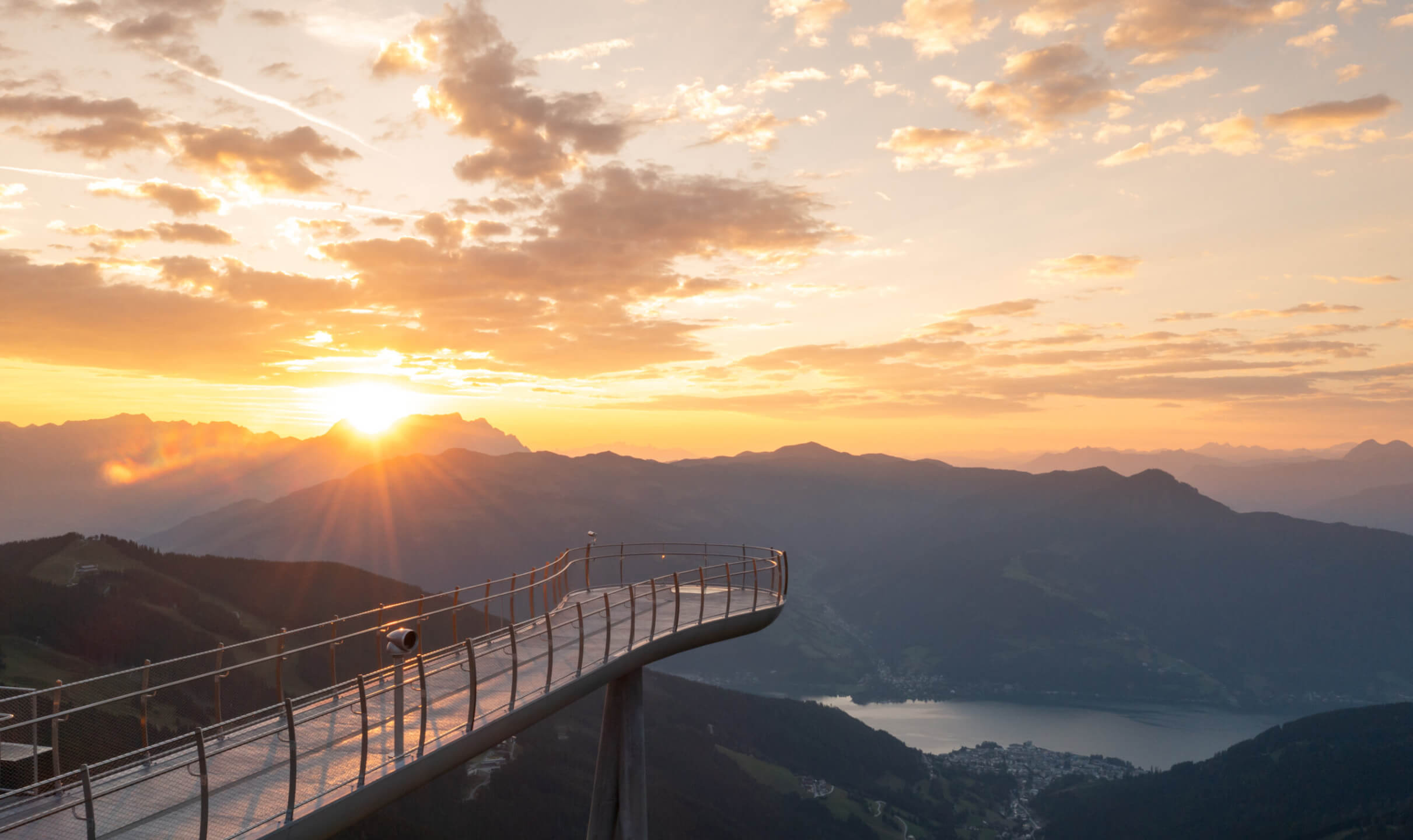
Your last stretch rolls down into the Pinzgau valley, and there it is: a turquoise lake, a little town on its shore, and two mountains watching over it. One with green meadows, one with a glacier where there is snow even in July.
This is where we live. This is why so many of our guests make the long drive from Milan. After a week of cities, lakes and passes, this is the place where you finally unpack, swim in the lake in the morning and eat a schnitzel on a mountain terrace in the evening.
And if you still have one day of road trip left in you, the Grossglockner High Alpine Road starts just around the corner. Austria’s highest mountain, a glacier, marmots whistling by the road. The perfect last chapter.
Ask your hotel about the Zell am See-Kaprun Summer Card. With partner hotels it is included in your stay and opens cable cars, the lake boat and the pools. Stay longer than one night and it pays for itself fast.
Do not rush this journey.
On a map it looks simple. But if you rush it, you only collect places. Plan it well and every part has its own feeling. This is how I would pace it:
- Days 1–2MilanDuomo rooftop at opening, aperitivo on the canals, Monza for speed lovers.
- Day 3Bergamo → SirmionePick up the car, lunch in the Città Alta, sunset in Sirmione.
- Day 4Lake GardaThe western shore, Limone, the lemon gardens, Riva.
- Days 5–6The DolomitesTwo nights in the mountains. Watch the peaks glow pink.
- Day 7Brenner → InnsbruckThe Golden Roof and the Nordkette above the city.
- Day 8+Krimml → Zell am SeeThe waterfalls in the morning, then home base, lake swims and the Grossglockner road.
Freedom is beautiful. Fines are not.
A road trip across three countries hides many small traps. None of them are hard, but each one can steal a day of your holiday. We have driven this road. We know them all.
- The right airport for you: Malpensa, Linate or Bergamo
- The best one-way car hire from Italy to Austria, without a shocking drop-off fee
- Which old towns are limited traffic zones, so no fines arrive months later
- Austrian vignette, the Brenner toll and the alpine road tolls, all sorted
- Hotels with parking, in the right places, for the right number of nights
- Duomo, Last Supper and restaurant bookings made before you land
- Your days timed for the light, not for the crowds
Milan to Austria road trip FAQ
How many days do I need?
Eight to ten days is perfect. Five is possible, but then you drive more and live less. If you only have a few days, we will tell you honestly which stops to drop.
When is the best time to go?
From late May to early October, when the mountain passes are open. September is my favourite: warm lakes, golden light and fewer people.
Is it difficult to drive?
Not at all. The motorways are easy and the mountain roads are well maintained, just narrower and with more bends. We plan the route around how comfortable you feel behind the wheel.
Can I pick up the car in Milan and return it in Austria?
Yes, but one-way rentals across borders often come with a high drop-off fee. This is exactly where we can save you money and stress.
Do I need a car in Milan itself?
No. Milan is easy on foot, by metro and by tram, and the centre has a daily charge for cars. Collect your car the morning you leave the city.
Can I do the route in reverse?
Of course. Start in Zell am See and finish with aperitivo in Milan. Both directions are beautiful.

Fly into Milan. Leave the rest to us.
Tell us your dates and how you like to travel. We will draw the route, book the stops and make sure you arrive in Zell am See with a smile, not a stack of fines.
Plan my Milan to Austria road trip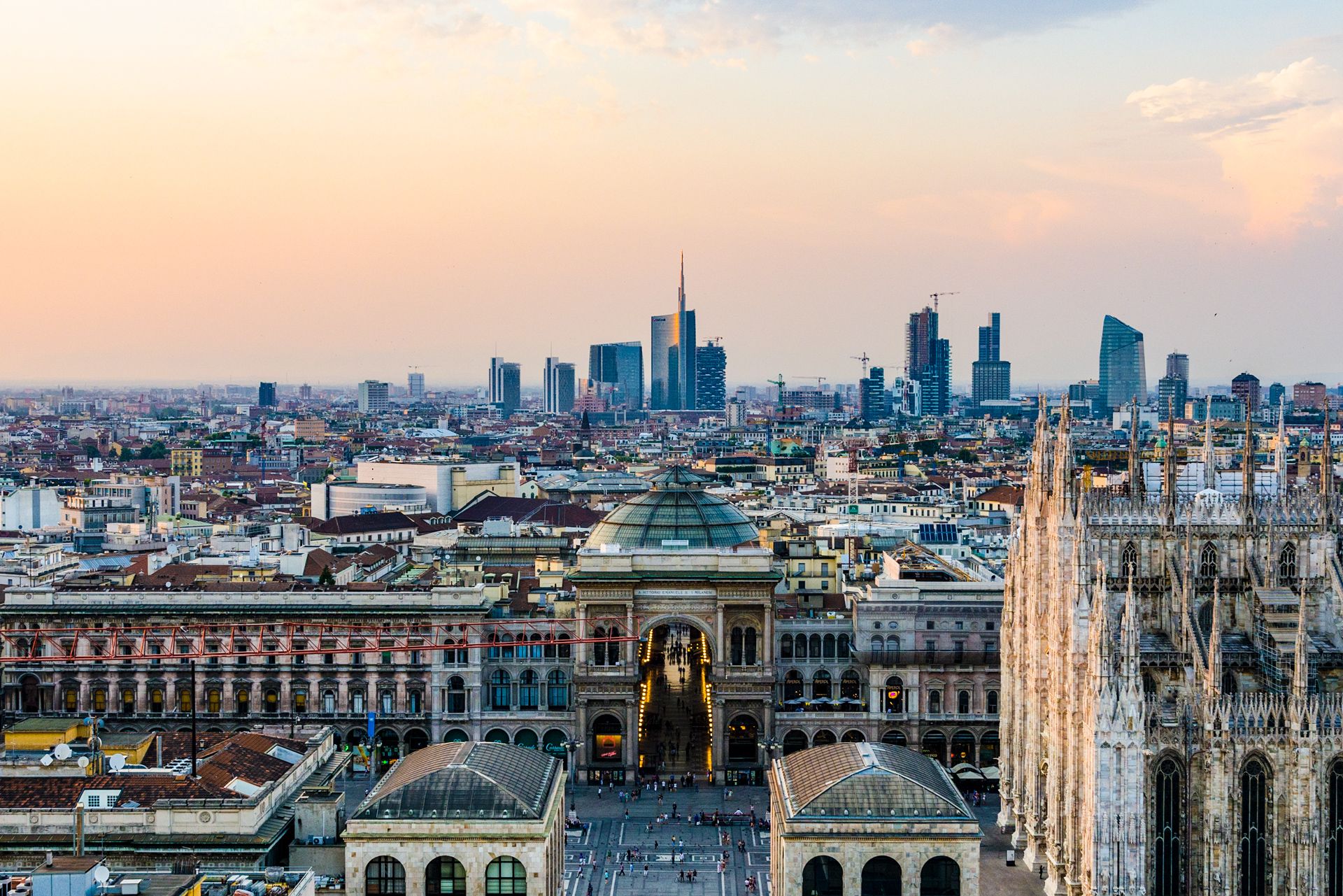 City break · Milan
- Cappuccino and brioche at the bar, standing like a true Milanese, at Marchesi, a pastry shop since 1824
- The Duomo rooftop as it opens, walking between marble spires before the crowds
- Aperitivo on the Navigli canals, or a Negroni Sbagliato at Bar Basso, where it was born
Milan, where your journey begins.
Fashion, opera and the best coffee of your life, all in one city. But Milan is also the easiest door into Italy and the Alps. Lake Como in about an hour, Lake Garda in two, the mountains not far behind.
- Three airports (Malpensa, Linate, Bergamo): we tell you which one fits your trip
- Fast trains from Milano Centrale to Venice, Florence, Rome and Switzerland
- The perfect start for the Italian lakes, a road trip to Austria or a grand tour of Europe
- Tell us where you go next
- We plan the route
- You start in style
Takes 2 minutes. A real local replies within 24 hours.
 7 nights · art, food & engines
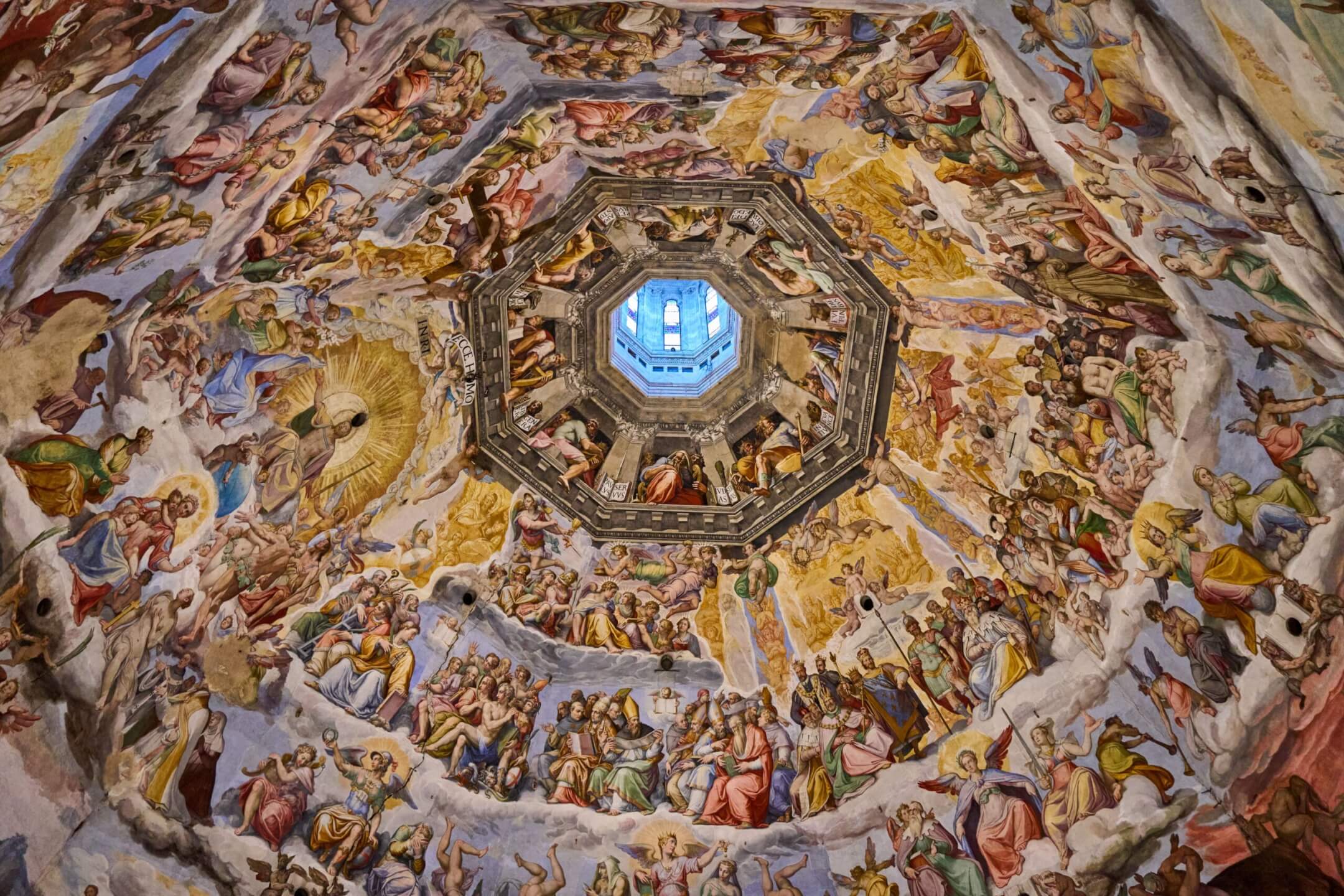
- 463 steps inside Brunelleschi’s dome.
- 666 arches up to San Luca, the longest portico in the world.
- At least 12 years for real balsamic of Modena.
Florence · Bologna · Modena · Maranello · Milan
From Michelangelo to Maranello.
Florence first, where the Renaissance still has the best seats in town. Then Bologna, the city Italians call la Grassa, the fat one, and mean it as a compliment. Modena, where balsamic vinegar ages longer than most marriages. Maranello, where red isn’t a colour, it’s a religion. And Milan, ending with Leonardo, the original genius of design.
What’s waiting for you- Florence: Michelangelo’s David, without the queue
- Bologna: fresh pasta with a local sfoglina
- A Parmigiano dairy at dawn, when the cheese is made
- Maranello: the Ferrari Museum, and the wheel if you dare
- Milan: Leonardo’s Last Supper, tickets sorted
Art in the morning. Horsepower in the afternoon.→ Italy’s two great obsessions, one route. Travel Sorted.
- Tell us your dates
- We plan your route
- You get your itinerary
Free to enquire. Takes 2 minutes. A real local replies within 24 hours.
Every great journey starts somewhere. Let’s find yours.
Coffee in Vienna. A sunset over the Danube in Budapest. Wine in the Tuscan hills while the bells ring out across the valley. In Europe, two hours on a train changes the language, the food and the light. We live right in the middle of it. We know which trains to take, which squares to linger in and which tables are worth the wait. You bring the curiosity. We’ll connect the dots.
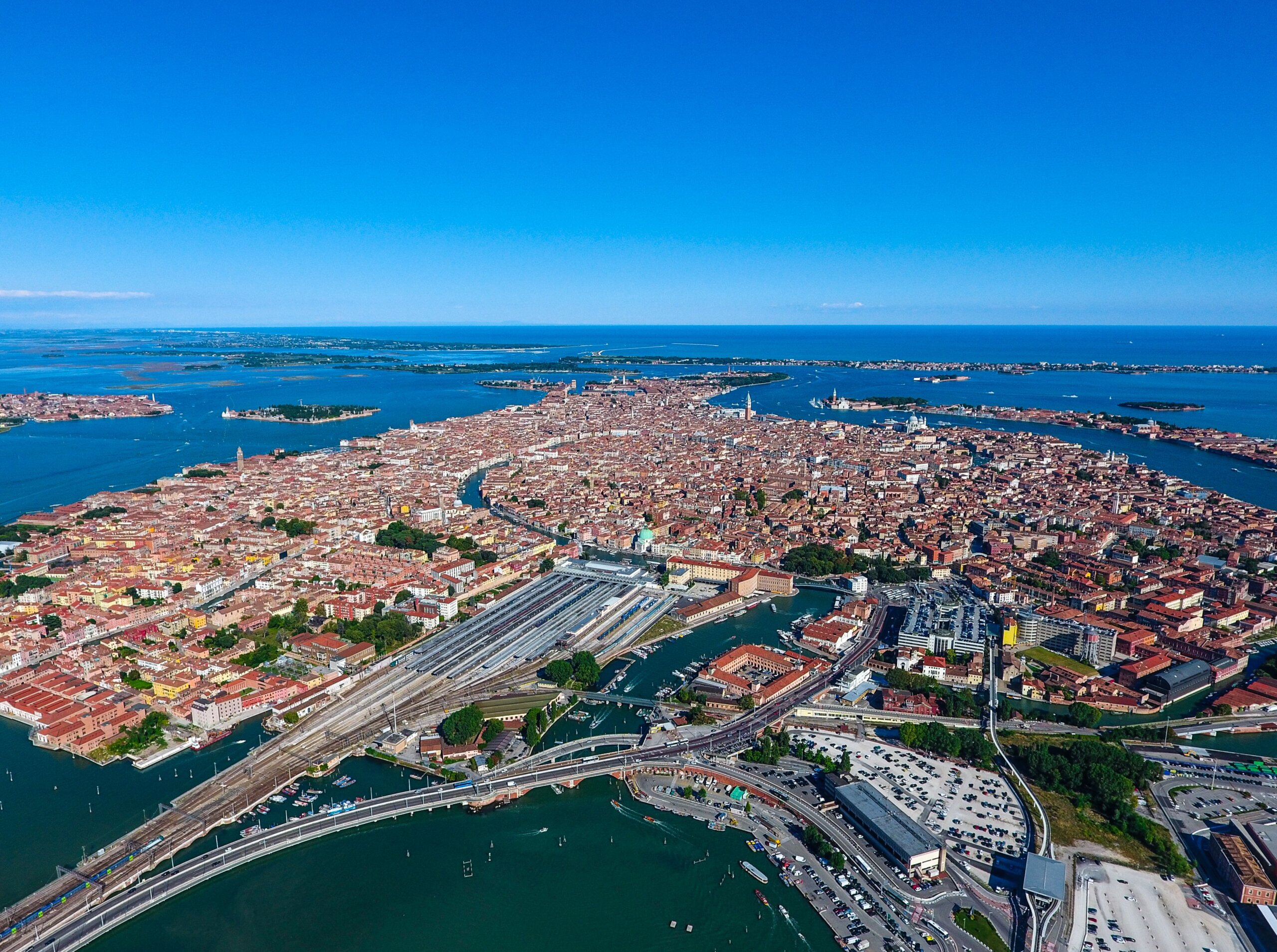 Rail · Alps to Italy
Breakfast in Bavaria. Dinner on a canal.
Over the Brenner Pass, through South Tyrol’s vineyards, and the light turns Italian. You just watch the Alps turn into Italy.
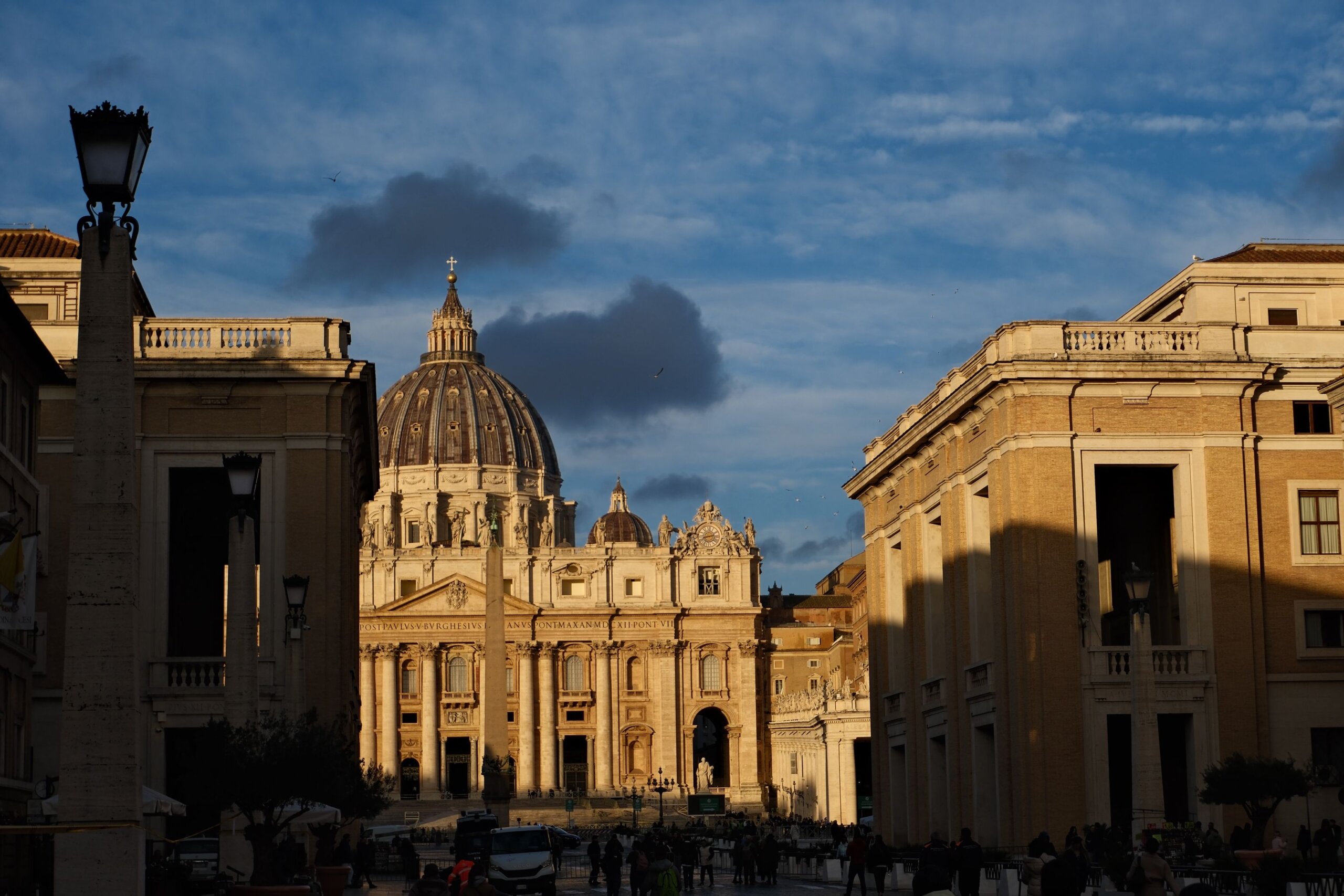 Night train · Rome
Fall asleep in Munich. Wake up in Rome.
A cabin with a real bed, the Alps in the dark, Tuscany at sunrise. One night saved, one day gained, one story for life.
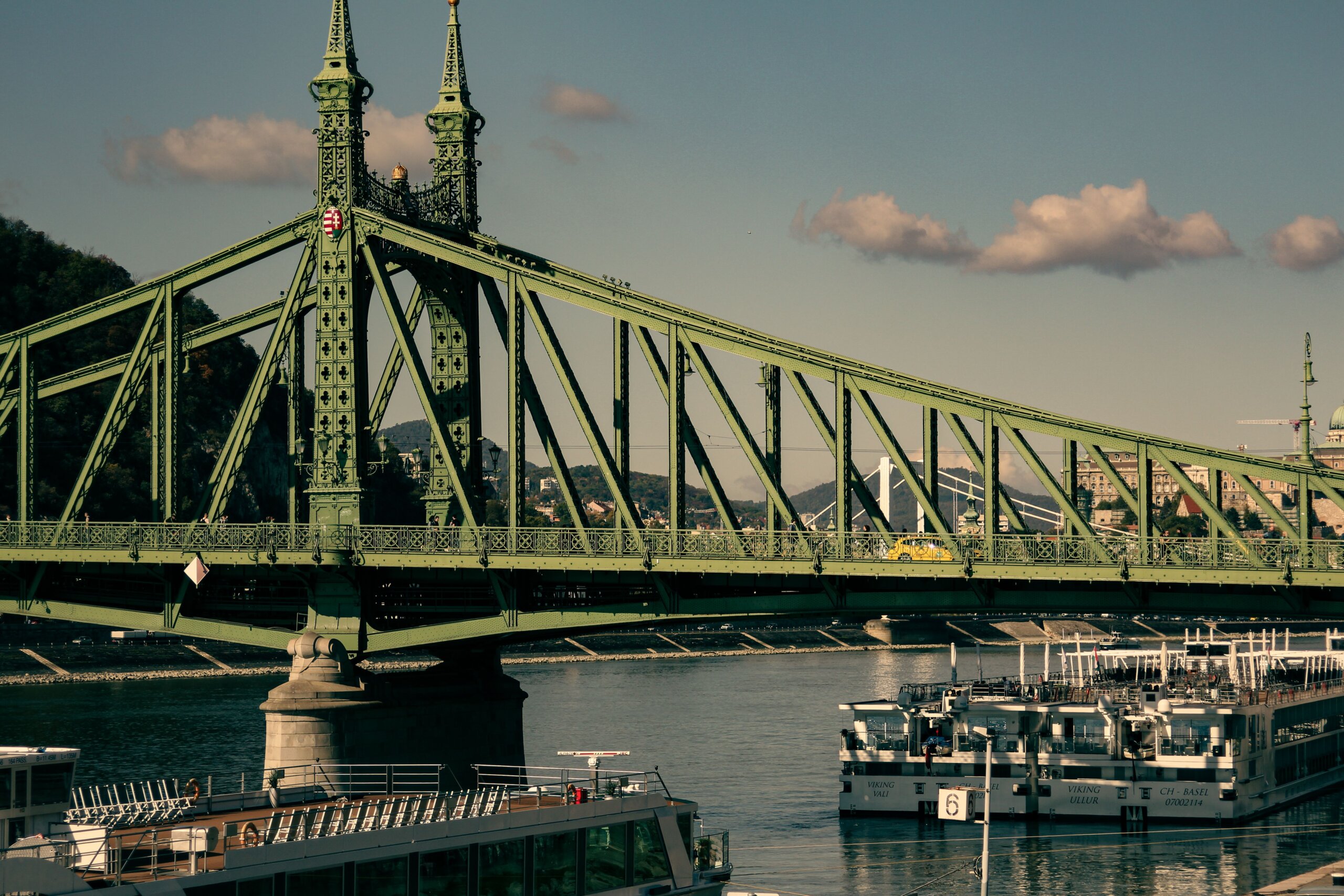 Rail · 3 capitals
Three capitals, one window seat.
Palaces, coffee houses and music, each a few hours apart. Watch the Danube appear and Prague’s spires rise on the horizon.
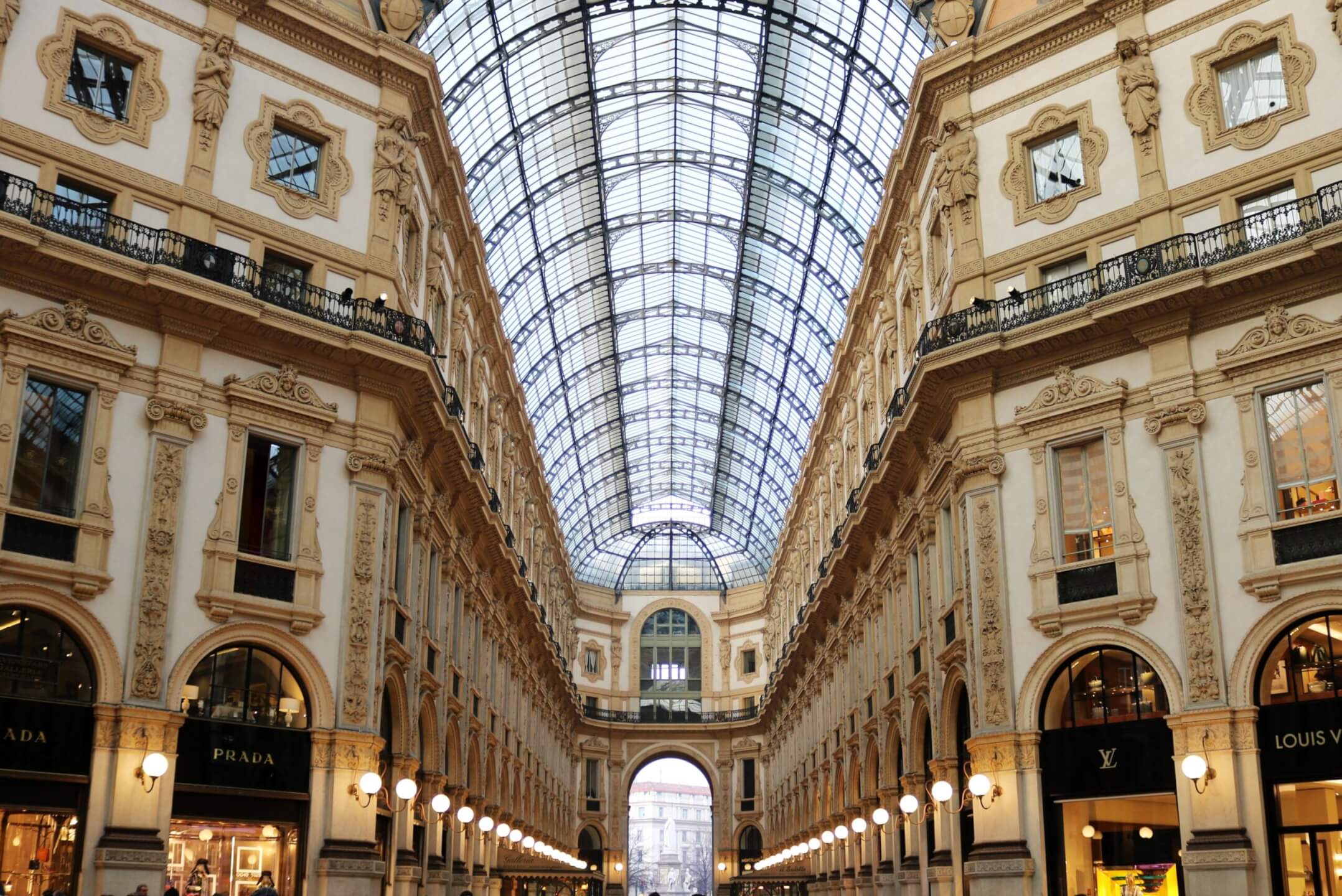 7 nights · Italy to Austria
It starts with Prada. It ends with cowbells.
Milan’s style, Lake Garda’s lemons, South Tyrol’s wine, then the Alps open up and everything becomes quiet.
 5 nights · by sea
You came for Venice. The Adriatic kept you.
Water taxi into Venice, the bacaro trail, Murano glass, then the catamaran to Istria and Rovinj at sunset.
 8 nights · one coastline
Five cities. Every version of Croatia.
Dubrovnik’s walls, Split’s fish market, Plitvice’s lakes and the sunset Hitchcock never forgot.